This is a sad story. Oct 28th 1968

Steve Kurek and the Key to the work house

Every family has a relative who knew everyone in town. In my extended family, that was Steve Kurek—my grandfather Michael’s brother, and the kind of man who could walk into the Lucas County jail and be greeted like a regular at a corner diner. The Blade once called him a “favorite prisoner,” which sounds like an oxymoron until you learn the rest. He was arrested around two hundred times for public intoxication over thirty-five years—enough to qualify for a punch card: ten nights, the eleventh free. If Toledo had a frequent-flyer program for the workhouse, Steve would’ve been platinum.

The numbers sound shocking until you look past them and see the person people remembered: good-hearted, gentle, never dishonest. He wasn’t a villain—he was a man who lost too many things, too early, and reached for a bottle the way some people reach for a life raft. It didn’t work, of course. Alcohol rarely saves anyone; it just keeps them floating in place while the current pulls.

Somewhere along the way, Steve met a public servant with an inconveniently large heart: Sheriff William Hirsch. Hirsch spent decades running the county workhouse and then the sheriff’s office, which meant he knew Steve on a first-name basis long before anyone thought to write it down. During Steve’s court-ordered stays, Hirsch made him a trusty and houseman at the workhouse, and the relationship drifted from bars and booking desks to something closer to family. The Hirsch kids—and later the grandkids—grew up seeing Steve around the workhouse the way other families know a favorite uncle who shows up at the holidays and fixes the squeaky screen door.

Steve took the “favorite” title seriously. If a sentence ended near Christmas, he’d ask to stay until the holidays were over—because the Hirsch children had gifts for him. Imagine that: a man most of Toledo knew by his mugshot getting a stocking with his name on it. You can’t write policy manuals for that kind of humanity.

After his parents died, Steve kept close to Hirsch’s orbit. The workhouse gave him structure and safety; the bottle was a door that never quite locked; and in between was Hirsch, who kept a light on for him at the workhouse. When Hirsch left office in 1969, that safety net changed—he had to move Steve out of the workhouse, arranging hospital care and then a bed at the county home when Steve’s health failed.

Steve married once—briefly—and then the drinking deepened. That tracks in our branch of the Kurek tree. My grandfather Michael died of tuberculosis and the collateral damage of alcohol. Micahel’s son, my father Edward, was touched in a similar way, as were three of my brothers, Ed, Ron and Phillip.

By the late 1960s, Steve’s body had more miles than the calendar said it should. He grew sick; Hirsch helped him into treatment and then into the county home. When Steve died in his early sixties, the retired sheriff said it hit him hard, like losing one of his own. And who could argue? If home is where they always make room for you, then Steve had two homes: the one he was born into, and the space kept for him at the workhouse.

It’s tempting to reduce Steve’s story to a headline (and there was one): two hundred arrests! Favorite prisoner! But the real headline is smaller and harder to print: Kindness keeps people alive. Not forever—nothing does—but for the long, ordinary stretch between crises. For thirty-three years, every police officer, judge, and city official knew who Steve was. Many treated him decently when they didn’t have to. That didn’t cure him. It did something else: it kept the door propped open for one more day, one more holiday, one more laugh while the coffee percolated and the sheriff’s kids handed Steve a wrapped present.

If there’s humor here—and I think there is—it’s the kind that lifts rather than mocks. Picture Steve, hat in hand, insisting to the booking sergeant that he was “just visiting,” or solemnly requesting to extend his stay because “the bed here sleeps better.” Humor, in this story, is the mercy we extend to people we love because we’ve decided to keep loving them, even when the math doesn’t add up.

What do we do with a legacy like that? In my family, we write it down. We say their names: Steve, Michael, Ed, Ron, Phillip. We tell the truth—that alcohol took too much from us—and we also tell the other truth: that people can still be gentle, loved, and important while they’re losing their fight. If you tilt the clipping just right, you can see the outline of a responsibility passed down to the living: be the person who keeps a light on. If you can’t stop the storm, at least mark the shore.

Steve Kurek didn’t die a headline. He died a brother, a friend, and a man whom a sheriff should’ve been done with—and wasn’t. Two hundred arrests is a ledger. A bed at the workhouse is a gospel. And somewhere in the middle is the complicated, very human life of a Kurek who kept finding his way back to people who wouldn’t let him be alone.

Camp Misery

John Thompson’s 3-month sickness. Dec-March 1862

The first Camp Convalescent, near Shuter’s Hill. View of Alexandria, Va. from camp of 44th, N.Y. Inf, ca. 1860-1865. Photograph by Matthew Brady. (The emulsion is lifting from the fragile negative in the National Archives.)

During the Civil War, Federal troops occupied the Alexendria VA seaport and the heights around it.   On Shuter’s Hill, the “Ellsworth Zouaves” built a fort they named after their beloved commander Colonel Elmer Ellsworth.

On the east side and bottom of the hill stood Camp Convalescent, which earned the nickname “Camp Misery.” One observer called it “a perfect Golgotha.” As many as 15,000 Union soldiers convalesced there, often in terrible and neglected conditions. Some froze to death, prompting the move to a location in modern day Arlington in 1863 (2nd camp convalescent).

John fell extremely sick when he was on picket guard duty in the later part of December 1862, about 9 miles from Arlington Heights where his company was encamped. John was with the 7th WIS INF (996 men, part of Kings Brigade, later known as the Iron Brigade) in camp at Arlington Heights, VA. His medical records found in his pension files said he had malaria during this time along with pneumonia. The documents also said “Chronic Suppuration of the Parotid glands and deafness” He recounted in the pension files that his head swelled up, his hair fell out, his eyes closed up and he lost all his teeth. The modern explanation of what he had would be Parotitis.  It is an inflammation of one or both parotid glands, the major salivary glands located on either side of the face, in humans. The parotid gland is the salivary gland most commonly affected by inflammation. He was sick for 3 months but was not sick enough to be admitted to the hospital for the entire time at Fairfax Seminary (hospital) just outside of Alexanderia VA and stayed at the Conversent hospital (Camp Misery) in Alexanderia VA at the base of Shuter’s Hill . Camp Convalescent was set up to house men not well enough to rejoin their regiments but not ill or wounded enough to take up a hospital bed. John was seen by Dr. Henry Palmer at Camp Convalescent on the 18th of March and his discharge papers were signed on 28 March 1861. His brigade had already moved on by then decamping from Arlington Heights on 10 March 1861 to fight in Centerville/ but the fight did not happen and they returned to Arlington Heights on 16 March 1862.

The camp’s nickname, Camp Misery, perhaps tells it all. Soldiers wrote about its insufficient food and poor living conditions. When Clara Barton visited in October 1862, she referred to it as “a sort of pen into which all who could limp, all deserters and stragglers, were driven promiscuously.” The troops had insufficient fuel wood and food; in fact, they were often required to forage on their own. The tents had no ground coverings or bedding; Julia Wheelock, a Michigan relief agent, described the men pacing back and forth to keep warm at night, then trying to sleep when it was a little warmer the next day.

Soldier’s letters provide insight into life at the camp. This letter was written on October 15th, 1862.

Dear Sarah,

I hope you will not be offended at me not writing to you oftener, The truth is I was not able to write I was so sick but thank God I am able to walk around with the aid of a staf. I had a sore spell of rheumatic pains in my head for ten days but has got quite rid of them now….I am so thin of flesh. We get very bad attendance here. I have not seen the Dr. in five days but I begin to think I get along better without him. We don’t get any vegetables of any sort at all. From 3 to 4 dies here daily. We are in tents, five in each tent, no beds, has to lay on the hard ground, which is not a very comfortable bed for sick folks, but we must put up with it now.

Alexandria, VA. You can see Fairfax Seminary in the distance.
John’s discharge papers for his first stint with the 7th WIS INF. He would later join the 30th WIS INF when he recovered.
Fairfax Seminary

A Rhode Island soldier recalled his visit to the Seminary in 1863.  There were three principal buildings.  “The center building, known as Aspinwall Hall, a fine piece of architecture, at a distance might be taken for an elegant modern church. . .  The lower floor of Aspinwall Hall was used for the offices of surgeons and attendants, and the upper floors, which were students’ rooms, were used for hospital purposes.  We passed up the staircases through all the halls and ascended to the cupola or steeple, from which we obtained a splendid view of the country for miles around.  Every arrangement was made for the comfort of the patients, and the floors and stairways almost shone with cleanliness.  Besides a delightful prospect, there was an abundance of sunlight and fresh air.”

1861 map showing location of Ft Ellsworth where Camp Misery was located by and Fairfax Seminary.

Cock-a-doddle-do

Can’t catch a break….. So when they passed out family coats of arms looks like the Kurek’s got the last one. Not a cool Tiger, Lion , Bear etc. We got a Rooster. AKA… Chicken a la king.

Kur is a Polish coat of arms. It was used by several noble families forming a Clan of Kur in the times of the Kingdom of Poland and the Polish-Lithuanian Commonwealth.

The Kur coat of arms have also been used before Jagiellon dynasty time in Poland under alternative name Kokoty, which can be seen in the court documents holding stamps of the CoA, signed by the judge Szyban von Der (from Der of Misni) between 1287 and 1311 in the court of Henry III, prince of Głogów. Family names: Bosowski, Gall, Horodyński, Karszański, Karszeński, Kazimierski, Kiczka, Kokot, Kur, Kurakowski, Kurek, Kurowski, Kurski, Kurzecki, Kurzewski, Kurzyk, Kurzyna, Szaprowski, Opersdorf

Grandpa was kidnapped by the Mohawks! WTF

Our 8th great grandfather Pierre Gauthier dit Saguingoira (b.1627 d.1703), and our 8th grandmother Marie Boucher of Bourg Deschillet (Echillais) in Saintonge, France (b. 1615 d. 1689-1698) were taken during the night of the 5th of August 1689 by the Mohawks. The Lachine massacre, part of the Beaver Wars, occurred when 1,500 Mohawk warriors attacked by surprise the small, 375-inhabitant, settlement of Lachine, New France at the upper end of Montreal Island. The Mohawks burned the village of Lachine near Montreal and took many prisoners. Pierre was one of them and he was taken with his wife to the Mohawk encampment. Alas Grandma Boucher doesn’t survive the ordeal. During his absence, Jean Baptiste Pottier is charged to manage the estate for his four children. It is learned by a concession act dated January 22, 1698, that he is back from his captivity with the Mohawks. Pierre was only gone 9 years! On October 30, 1700, He is among the residents who authorized the Sulpicien of Montreal to dig a ship canal (Lachine canal) up to Saint-Pierre River after having dictated his will on September 6, 1703, he passed away in Lachine, on December 5 of the same year, where he was buried the next day.

In his History of Canada, the superior of the Sulpicians of Montreal, François Vachon de Belmont, described the horror: “After this total victory, the unhappy band of prisoners was subjected to all the rage which the cruelest vengeance could inspire in these savages. They were taken to the far side of Lake St. Louis by the victorious army, which shouted ninety times while crossing to indicate the number of prisoners or scalps they had taken, saying, we have been tricked, Ononthio, we will trick you as well. Once they had landed, they lit fires, planted stakes in the ground, burned five Frenchmen, roasted six children, and grilled some others on the coals and ate them.” Yummy.

The attack was precipitated by growing Mohawk dissatisfaction with the increased French incursions into their territory, and was encouraged by the settlers of New England as a way to leverage power against New France during King William’s War. During the attack, the Mohawk destroyed a substantial portion of the Lachine settlement by fire and killed or captured numerous inhabitants, although historic sources have varied widely in estimates of the number killed, from 24 killed and 70 taken prisoner. Later, a few prisoners managed to escape, and some were released in prisoner exchanges. Others were adopted by the Mohawk. In all, forty-two inhabitants of Lachine were never heard from again.

In Lachine, in the new municipal park, Mr. Mayor Anatole Carignan set up a small house in 1937 and 1938: “La Maison du Colon” (the settlers’ house).
A bronze plaque offered by the municipality, and bearing the names of the first colonists, is affixed close to the entrance door. The citizens of Lachine honored the memory of the first settlers of their territory, the colonists who were established from 1666 to 1669. The first name that we read entered on the list is that of Pierre Gautier dit Saguingoira, our 8th great grandfather.

Got a small g god for ya. Meet grandpa THOR!

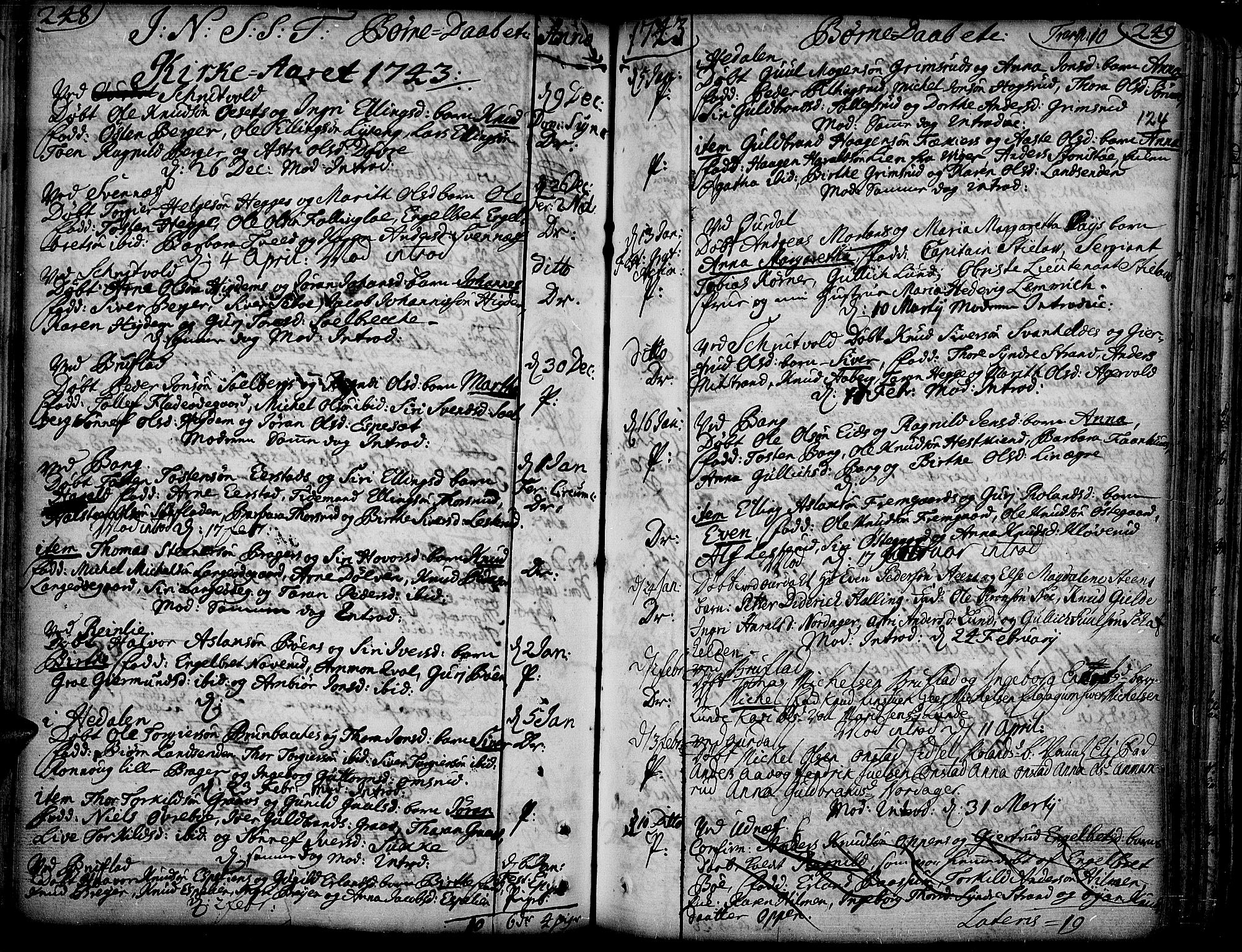
In Norse mythology, Thor is a hammer-wielding god associated with thunder, lightning, storms, oak trees, strength, the protection of mankind, and also hallowing, healing and fertility. ….and he is part of the Avengers….In our genealogy Thor is THOR 6th great grandfather of us all! Found weird grandparents names but nothing as cool as THOR! Kind of loses it on the last name though …Torkildsen….Just doesn’t have a ring to it. I have visions of the family making fun of him ….oh lookie, here comes TORK god of the ballpeen hammer…. So Jankowski’s, Boyum’s and Abraham’s meet THOR TORKILDSEN our 6th great grandfather, his wife and our 6th great grandmother GUNILD GUULSDATTER and their daughter and our 5th great grandmother JORAN THORSDATTER. Joran was born in 1743. Thor and Gunild in the early 1700’s. Photo is the baptism record of Joran. Her record is next to the last on the left page. Joran is the great grandmother of Kristi Haugen Thompson. John Thompson’s wife. John is why we were all in Sioux Falls. John was the first Norwegian settler in Minnehaha County (1867) after the Indian uprising. His daughter Berthine was the first white child born in Minnehaha county. Her husband, Thomas Fersdahl, inherited the log cabin that sits at the Sioux Empire fair grounds. You can see this record and others on Ancestry.com. Send me your email and I will give you access to it if you want to see the rest of the tree.
Kildeinformasjon: Oppland fylke, Aurdal, Ministerialbok nr. 4 (1730-1762), Fødte og døpte 1743, side 248-249. http://www.arkivverket.no/URN:NBN:no-a1450-kb20070603900679.jpg

Score!

158 year old HUGE original 1862 Civil war broadside for the Waushara Union Guards. This is John Thompson’s company, Company H of the 30th Wisconsin. John Thompson, my 4th great grandfather is listed on this sheet as enlisting on Aug 18th 1862. He is a Corporal from Mt. Morris. When the soldiers mustered into service the local printing shop made these broadsides and posted them around Madison and at the Camp. This was made in Oct 1862. I’m going to give it to the Court House Museum someday when I get done drooling over it.

7 degrees

SS Sardinian

What would Guglielmo Marconi, the father of Trans-Atlantic radio transmission and recognized as one of the inventors of the radio and Teresa Braa have in common? Well….they traveled on the same ship but not at the same time….

This is the ship the SS Sardinian. A famous ship because of it’s connection to Marconi and to the Erik Larson Book Thunderstruck. This is why I love researching a record down to the last letter.

In May of 1884 Teresa Nicoline Matilda Togersdatter Braa (Later, the second wife of Nils Boyum) came to America. The first leg of her journey to America took her from Norway to Hull England by way of the Steamship the HERO. The Sardinian was built in 1874 and launched on June 3 at Greennock by Robert Steele and CO. she was 400 feet by 42.3 feet. Her maiden voyage from Liverpool to Quebec was on July 29th, 1875. Teresa took the Sardinian on May 8th, 1884 from Liverpool England and arrived in Quebec on May 18th. In 1897, a year before Teresa died, the Sardinian was re-engined and her mast were reduced down to two. She ended up being a coal hulk in 1920 and was eventually scrapped at Bilbao in 1938.

On November 26th 1901 Marconi and his equipment took a historical trip and were transported by the Sardinian to set up a wireless station at St Johns, Newfoundland. This is where Marconi established the first wireless transmitting station at Marconi House, Rosslare Strand, Co. Wexford to act as a link between Poldhu in Cornwall and Clifden in Co. Galway. He soon made the announcement that on 12 December 1901, using a 152.4-metre (500 ft) kite-supported antenna for reception, the message was received at Signal Hill in St John’s, Newfoundland (now part of Canada) signals transmitted by the company’s new high-power station at Poldhu, Cornwall. The distance between the two points was about 3,500 kilometres (2,200 mi).

If you read the book Thunderstruck by Erik Larson this trip and the Sardinian are mentioned late in the book.